

A slow drain is frustrating. Wastewater coming back through a tub or floor drain is something else entirely. When heavy rain hits Washington County, homeowners may wonder whether the storm caused the backup and what they should do first. Safety comes before troubleshooting.
First: stop using affected plumbing fixtures
If wastewater rises in a shower, tub, toilet or floor drain, stop running sinks, showers, laundry and dishwashers throughout the home until the blockage is assessed. More water may worsen the backup, even if another bathroom appears unaffected. Western Virginia Water Authority's backup-response guidance similarly advises against running water down drains when a household blockage is suspected. Keep children and pets away. Do not touch sewage with bare hands or walk through contaminated water.
Watch for electrical and contamination risks
Never enter standing water where electrical outlets, cords, appliances or a service panel may be energized. If it is unsafe to access the area, leave it alone and contact qualified help. The CDC's flooded-home safety guidance warns never to turn power on or off, or use electrical tools or appliances, while standing in water. If reaching the main power switch requires entering standing water, call an electrician rather than trying it yourself.
Sewage exposure can create health risks. Keep the affected area separate from clean living spaces, and avoid carrying contaminated belongings through the home. Professional cleanup may be needed, especially for porous materials such as carpeting, insulation or drywall. Clearing the drain does not make contaminated rooms or belongings safe; ask an appropriate cleanup specialist about them rather than assuming a plumbing appointment includes flood restoration or mold remediation.
Understand why backups can coincide with storms
Heavy rain can enter damaged sewer infrastructure and overload some sanitary sewer systems. Western Virginia Water Authority explains that excess stormwater can exceed sewer capacity, while roots and grease can also create blockages. On private property, pipe defects or an existing obstruction may cause wastewater to back up. A storm may reveal a preexisting weakness without being the direct cause.
If the problem is unexplained clean water or damp ground rather than wastewater rising through drains, read Storm Damage or Plumbing Leak? How Southern Utah Homeowners Can Tell for a different set of warning signs. Do not enter an unsafe area to identify the source.
Determine whether neighbors are affected
If multiple homes on the street have backups, contact the local wastewater utility or district to report a possible public-system problem. If only one fixture is slow, a localized clog may be more likely. If several fixtures back up together, the building drain or sewer lateral deserves investigation. These are clues, not a diagnosis; do not run water or flush toilets to test them.
Responsibility for the sewer lateral—the pipe connecting the home to the public sewer—and its connection depends on your provider's rules and the location of the defect. Ask your wastewater provider where its maintenance responsibility ends, and have a qualified plumber help identify the affected section. Do not assume a blockage outside the house is automatically the utility's responsibility.
Avoid risky do-it-yourself fixes
Do not mix drain chemicals or keep flushing toilets to force a clog through. Do not add bleach or another cleaner to water that may already contain a drain-cleaning product. CDC cleanup guidance explicitly warns never to mix bleach with ammonia or any other cleaner. Tell the plumber about any product already used so they can assess conditions safely.
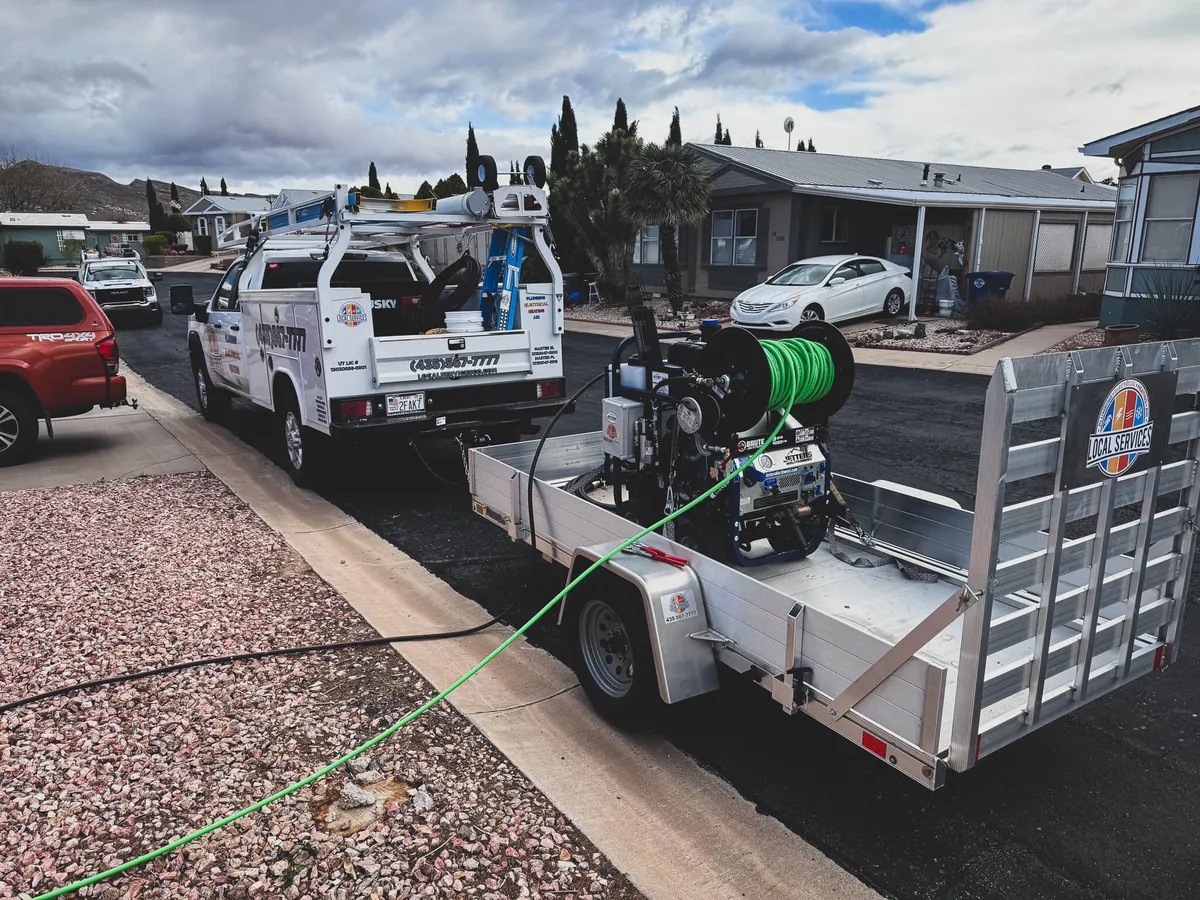
Chemical cleaners may not resolve a main-line blockage. A qualified plumber may recommend a camera inspection or mechanical cleaning after assessing conditions. Our Drain Cleaning Services page is the relevant starting point for discussing persistent drain symptoms and an appropriate next step.
Reduce the risk of future backups
Keep wipes, grease and other non-flushable materials out of drains. Ask a qualified plumber whether your home's layout and local code make a backwater valve appropriate; it is not suitable for every property and requires correct installation and maintenance. Address recurring slow drains rather than waiting for the next storm.
For broader preparation, use the Southern Utah Storm-Season Home Checklist: Plumbing, HVAC and Power. Routine maintenance can reduce some risks, but it does not make sewage or standing-water electrical hazards safe to handle.
When to contact Local Services Inc.
If you notice recurring slow drains or drain backups, contact a qualified plumbing professional. Local Services Inc. serves the St. George area. Explore our plumbing services or contact our team at (435) 567-7777 to discuss symptoms and confirm availability for your address. If there is an immediate flood, gas, electrical or sewage hazard, prioritize emergency and utility guidance rather than waiting for a routine appointment.
Review our service areas and local plumbing pages for Hurricane, Washington City and Santa Clara. The Local Services Inc. home page provides an overview of our home services.
Frequently Asked Questions
Does heavy rain always cause sewer backups?
No. Rain can be a contributing factor, but private clogs, damaged pipes and public-system issues can also cause backups.
Who is responsible for a sewer line problem?
Responsibility varies by utility rules and the location of the defect. Ask the local wastewater provider and a qualified plumber to help identify the affected section.
Can I keep using one bathroom if another backs up?
It is safer to stop using water fixtures until the extent of the blockage is understood; additional flow may worsen a main-line backup.
A practical next step
From a safe, dry location, take a few photos, write down the symptoms and the time they started, and avoid disturbing potentially unsafe equipment. Note which fixtures were affected and whether neighbors reported similar problems. For a service-related concern, contact Local Services Inc.. Report a suspected public-system backup to your wastewater provider as well.
Recurring slow drains or wastewater backing up? Stop fixture use, keep clear of contaminated water and ask Local Services Inc. about an appropriate plumbing assessment.
View Drain Cleaning Services