

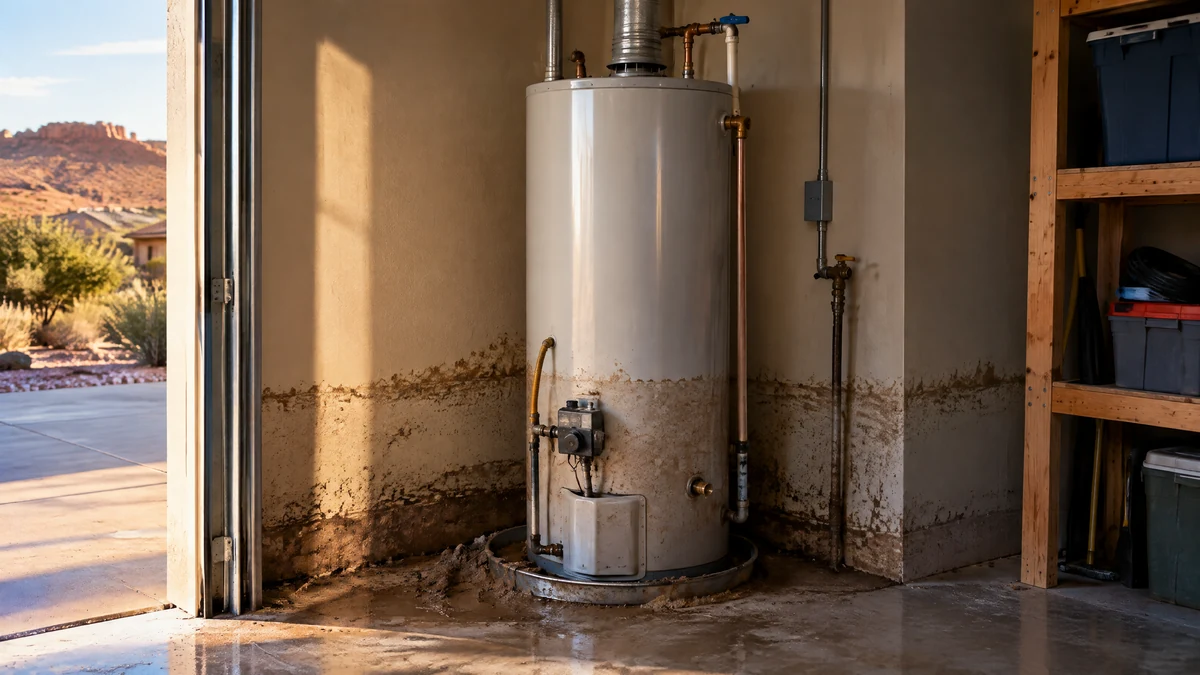
A water heater can look normal after floodwater recedes, even when critical controls or insulation have been damaged. If your St. George-area home experienced water intrusion, knowing what not to restart is just as important as knowing whom to call.
Do not restart a water heater that was submerged
Floodwater may contaminate burners, controls, wiring, insulation and safety devices. Even when the outside looks dry, internal damage may remain. Do not relight a pilot, switch on power or try to dry and reuse a submerged unit. Keep it off and arrange a qualified, manufacturer-guided assessment.
For example, A. O. Smith's flood-damaged water heater bulletin requires complete replacement of water heaters subjected to flooding or extensive inundation by water from any source, and says not to operate an appliance if any part has been underwater. Its guidance does not recommend drying or repairing a flooded unit for reuse. Ask the professional to confirm the requirements for your specific manufacturer and model.
Treat gas and electricity as separate hazards
For a gas unit, if you smell gas or suspect a leak, leave immediately. Do not operate switches, use flames or do anything that could cause a spark. From a safe location outside, call your gas utility's emergency number or 911 and follow their instructions. Do not return until emergency responders or the utility say it is safe.
For an electric unit, avoid wet electrical equipment and contact a qualified professional. Do not approach a breaker panel through standing water or turn a breaker back on to test the heater. The CDC's guidance for reentering a flooded home says never to turn power on or off while standing in water and calls for an electrician to check the home's electrical system before power is restored. If controls cannot be reached safely, keep clear and contact the utility or an electrician rather than attempting a shutoff yourself.
Differentiate floodwater from a plumbing drip
A small leak at a fitting is not the same as contaminated floodwater surrounding the tank. From a safe, dry location, record the approximate water level, whether the unit was operating and where water appeared to enter. Even a shallow flood can affect low-mounted controls. Do not guess that a unit is safe because the waterline is below the top of the tank.
If the source is unclear, our guide to distinguishing storm damage from a plumbing leak explains useful observations to share with a professional. Identifying a drip does not clear equipment for use if water has reached its controls or electrical parts.
Ask for a documented professional assessment
A qualified plumber or service professional can identify the model, document the extent of exposure and consult manufacturer guidance. Ask for the model number, observed waterline and applicable replacement requirements to be recorded in the assessment. Do not accept a simple dry-out or a successful test run as proof that a flooded unit is safe.
Electrical and gas work may require appropriately licensed specialists. Ask whether replacement, permits or code updates are necessary before authorizing work. For a unit covered by A. O. Smith's flood bulletin, its complete-replacement requirement should guide the recommendation—not an attempt to repair flood-damaged components.
Protect drinking-water quality after a flood
If officials issue a boil-water notice or another drinking-water advisory, follow your water provider's instructions. The CDC's flood-reentry guidance warns that floodwater can contaminate drinking-water supplies and directs residents to follow local guidance. A water heater is not a treatment method for flood-contaminated drinking water; do not assume heated tap water is safe.
If you suspect your potable-water system was contaminated, ask the utility and a qualified plumber about appropriate testing and disinfection procedures before using the water. Do not improvise a flushing or chemical-treatment process, and do not use suspected contaminated water for drinking, cooking or hygiene while awaiting instructions.
Plan a safer replacement location
If replacement is needed, discuss applicable elevation, seismic restraint, drain-pan and venting requirements with the installer. The correct solution depends on the property, equipment type and local code—not on a generic online checklist. Do not raise or relocate the heater yourself; gas, electrical, water and vent connections need appropriate design and installation.
For planning beyond the water heater, use our Southern Utah storm-season home maintenance checklist to organize plumbing, HVAC and power concerns. Preparation does not make already-submerged equipment safe to restart.
When to contact Local Services Inc.
If you notice persistent plumbing leaks, abnormal water pressure, drain backups or concerns about a water heater, contact a qualified plumbing professional. Local Services Inc. serves the St. George area. Review our water heater services or plumbing services, and contact our team at (435) 567-7777 to discuss the equipment and confirm availability for your address. If there is an immediate flood, gas, electrical or sewage hazard, prioritize emergency and utility guidance rather than waiting for a routine appointment.
Check our service areas for coverage information, or see local plumbing information for Hurricane, Washington City and Santa Clara. The Local Services Inc. home page introduces our broader home services. A plumbing appointment should not be assumed to include flood restoration or contamination remediation.
For other plumbing symptoms after water intrusion, read After the Flood: 7 Plumbing Problems Southern Utah Homeowners Should Check. Keep documentation separate for the heater and any other affected fixtures so the appropriate professionals can assess each concern.
Frequently asked questions
Frequently Asked Questions
Can a flooded water heater be repaired?
Do not assume a flooded water heater can be dried or repaired for reuse. A. O. Smith's flood bulletin requires complete replacement of water heaters subjected to flooding or extensive inundation. Have a qualified professional identify your model and follow its manufacturer's requirements. Do not restart submerged equipment yourself.
Is it safe to turn the breaker back on after water recedes?
Not without qualified assessment of affected electrical equipment and the home's electrical system. Water can leave hidden damage. Do not operate a breaker or any electrical equipment while standing in water, and do not turn power back on to test a flooded water heater.
Will homeowners insurance pay for a flooded water heater?
Coverage depends on the policy and cause of loss. Document damage from a safe location and ask your insurer directly about applicable coverage and exclusions.
A practical next step
Take a few photos from a safe, dry location, write down the symptoms and the time they started, and avoid disturbing potentially unsafe equipment. Do not enter standing water or touch the unit to obtain a model number or picture. Leave flood-exposed equipment off while arranging the appropriate professional assessment.
For a water-heater service concern, contact Local Services Inc. at (435) 567-7777 to discuss next steps. Immediate gas, electrical or flooding hazards require emergency or utility assistance first.
Contact Local Services Inc.