

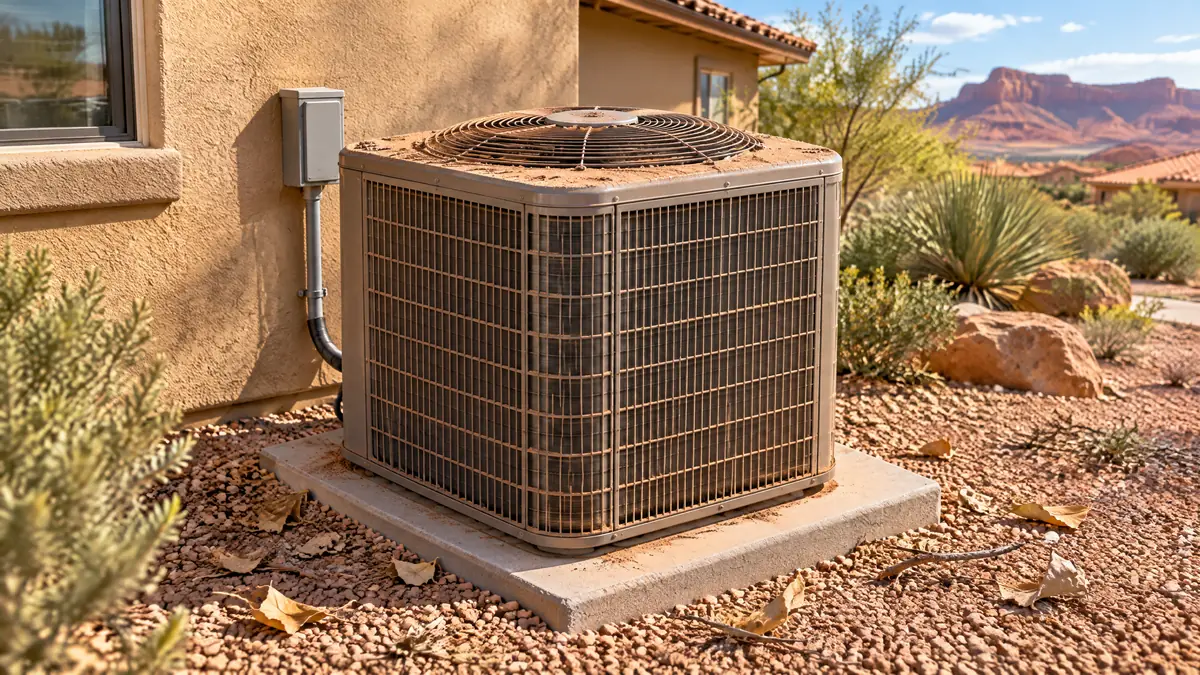
Southern Utah windstorms can leave dust on patios, vehicles and outdoor cooling equipment. Your air conditioner is designed to operate outdoors, but restricted airflow and debris can affect performance. These simple checks help you decide what is safe to handle and when to call an HVAC technician.
Why wind and dust matter in Southern Utah
St. George-area homes experience dust, windblown debris and long cooling seasons. Airborne particles can load filters faster, while leaves and debris can collect around an outdoor condenser. Dust alone does not prove that equipment is damaged, but it is a reason to pay attention to airflow and performance.
Inspect the air filter first
Check a homeowner-accessible filter using the manufacturer's instructions, including its shutdown procedure. If accessing it requires removing equipment panels or working near wiring, have a technician handle it. If the filter is visibly loaded or due for replacement, use the specified size and compatible filtration rating. An overly restrictive filter can reduce airflow. Do not operate equipment without the filter when the system requires one.
The EPA's filter-maintenance guidance recommends using the highest-efficiency filter approved by the system manufacturer, replacing clogged filters more frequently and ensuring a proper fit. Do not wash a disposable filter; follow the instructions for your particular filter type.
Look around the outdoor unit without opening it
After the storm has passed and the area is safe, look for branches, plastic bags or vegetation restricting airflow. Carrier's outdoor-unit maintenance guidance explains why surrounding debris matters. Maintain the clearances required by your own equipment's installation instructions, including space above it; do not treat a general clearance suggestion as the specification for every model.
Only collect loose debris on the surrounding ground when you can do so without touching the unit or reaching through its grille. Do not remove equipment panels, bend fins, pressure-wash coils or touch wiring. Leave trapped debris, a shifted unit or visible physical damage to a qualified technician.
If the unit was submerged or exposed to floodwater, do not restart it or attempt to clean it. Keep clear of standing water and wet electrical equipment, and never operate electrical switches while standing in water. Ready.gov's flood-safety guidance explains these hazards. Our guide to flood-exposed AC and HVAC equipment covers the separate need for qualified assessment before restarting.
Listen for changes and track cooling performance
New rattling, repeated shutdowns, weak airflow, ice buildup or unusually warm supply air may warrant service. Check thermostat settings and obvious filter issues first, provided there is no water exposure or electrical hazard. These symptoms do not identify the cause by themselves, and dust may not be the only issue.
Do not keep forcing a struggling unit to run. If it trips a breaker, do not repeatedly reset or force the breaker on; arrange qualified diagnosis. For ice, repeated shutdowns or signs of damage, stop cooling at an accessible, dry thermostat if safe and seek service. Stay away from exposed wiring, sparking or damaged electrical equipment; contact the utility or emergency services for an immediate hazard.
Avoid aggressive DIY cleaning
Spraying chemicals into a condenser or blasting it with a high-pressure hose can damage components. Carrier's coil-cleaning guidance warns that pressure washers can damage thin fins and that highly acidic cleaners can damage coil metals. Leave coil cleaning, refrigerant work and electrical testing to qualified technicians following your equipment manufacturer's procedures.
Dust in the yard is not a reason to order duct cleaning automatically. EPA does not recommend routine duct cleaning; excessive debris released from registers, vermin or suspected substantial mold call for a specific assessment. An airflow problem deserves diagnosis rather than an assumption that dirty ducts are responsible.
Make storm checks part of seasonal maintenance
Record filter changes, note any performance changes and schedule maintenance before peak summer demand. If a storm caused a power interruption and there is no damage or water exposure, follow the normal startup and restart-delay instructions for your equipment; do not repeatedly cycle the thermostat to bypass a delay. For broader preparation, use our Southern Utah storm-season home checklist. A preventive visit may identify problems before they become a no-cooling call, but it does not guarantee storm protection.
When to contact Local Services Inc.
If your HVAC system is not cooling properly, makes unusual noises or may have been exposed to water, contact a qualified HVAC professional. Local Services Inc. offers HVAC services in the St. George area. Ask about AC repair and assessment and confirm availability for your address. If there is an immediate flood, gas, electrical or sewage hazard, prioritize emergency and utility guidance rather than waiting for a routine appointment.
Review our service areas and Local Services Inc. home page for coverage and home-service information. If the same storm also revealed a plumbing concern, our local plumbing pages cover Hurricane, Washington City and Santa Clara. Those are plumbing resources; ask our team specifically about HVAC service for your location.
Frequently Asked Questions
Should I replace my AC filter after every dust storm?
Not necessarily. Inspect it and follow the equipment and filter manufacturer's schedule; a visibly loaded or clogged filter may need earlier replacement. Use the specified size and a filtration rating approved for your system rather than automatically choosing a more restrictive filter.
Can I hose down my outside AC unit?
Do not assume hosing is appropriate for your model or its condition. Follow the equipment manual and ask a qualified technician about coil cleaning. Do not pressure-wash, spray chemicals, remove equipment panels or direct water at electrical components. Leave flood-exposed or damaged equipment off pending professional assessment.
Does dust in the yard mean my AC ducts need cleaning?
Not automatically. EPA does not recommend routine duct cleaning. Investigate specific concerns such as excessive debris coming from supply registers, vermin or suspected substantial mold rather than treating yard dust as proof that duct cleaning is needed. Airflow problems also need diagnosis, not an automatic duct-cleaning recommendation.
A practical next step
Take a few photos from a safe location, write down the symptoms and the time they started, and avoid disturbing potentially unsafe equipment. For a service-related concern, contact Local Services Inc. at (435) 567-7777. If your concern is unexplained water rather than dust or cooling performance, our guide to storm damage versus a plumbing leak explains useful observations without asking you to enter a hazardous area.
Noticing weak cooling, unusual noises or storm-related damage? Keep unsafe equipment off and contact Local Services Inc. to discuss an appropriate HVAC assessment.
AC Repair and Assessment