

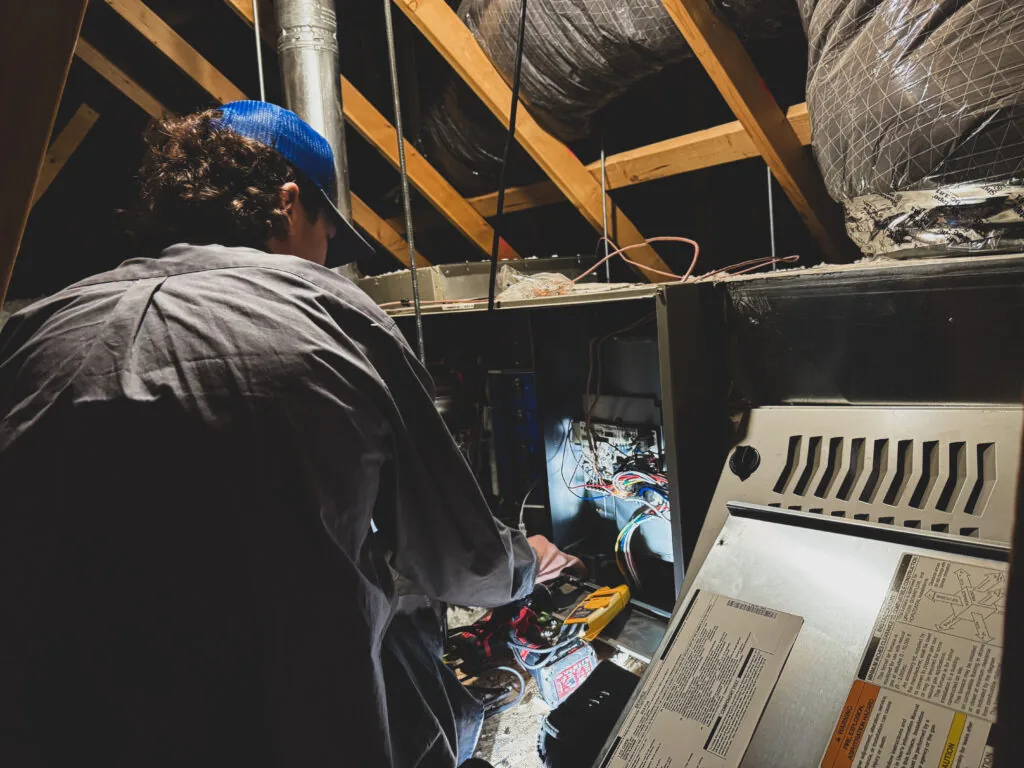
After heavy rain, an outdoor air-conditioning unit may be surrounded by puddles or debris. That can be unsettling, particularly when flooding has affected nearby streets and yards. The most important distinction is whether the equipment was merely rained on—as outdoor units are designed to be—or was actually submerged or exposed to moving floodwater.
If any HVAC equipment has been submerged, do not turn it on until a qualified technician has evaluated it. Floodwater can introduce contaminants and damage electrical and mechanical components in ways that are not obvious from the outside.
Rain on an outdoor condenser is not the same as flooding
Most outdoor condenser units are built to operate in normal weather, including rain. But floodwater that reaches electrical components, motors or other sensitive parts creates a different situation. Mud, sediment and debris can also obstruct airflow or affect operation.
Never assume a unit is safe merely because it looks dry the next day.
What to do after floodwater reaches HVAC equipment
1. Keep clear of standing water and electrical hazards
Do not approach submerged equipment, exposed wiring or an electrical panel in a wet area. If there is a dangerous condition, contact the utility or emergency services. Do not operate switches while standing in water. Ready.gov's flood-safety guidance warns that floodwater can carry contaminants, dangerous debris and electrical hazards.
2. Leave the system off
Do not use the thermostat to test whether the system still works. A restart can worsen damage or create a safety hazard. If the system has already been switched off safely, leave it off until inspected. If you cannot safely reach the controls or disconnect, keep clear and contact the appropriate utility or qualified professional.
3. Document what happened from a safe location
Take photographs showing approximate water height, visible debris and the surrounding area if you can do so without entering hazardous conditions. Keep dates and notes for the service technician and any insurance inquiry.
4. Arrange a professional inspection
A qualified HVAC technician can evaluate electrical components, controls, motors, coils and other affected parts. AHRI's guidance on flooded HVAC equipment calls for qualified contractors—not homeowners—to inspect affected systems. Flood-damaged equipment may need replacement; for split AC and heat-pump systems, its detailed guidance calls for inspection of electrical and refrigeration connections and a professional, case-by-case repair-or-replacement decision. Follow the manufacturer's requirements for your equipment.
5. Address the source of the flooding
Even a repaired or replaced unit remains vulnerable if runoff repeatedly collects at the same spot. Drainage or grading work may require a separate qualified contractor. Do not raise, relocate or modify HVAC equipment without proper design and installation.
What about indoor HVAC components?
Flooding can affect furnaces, air handlers, ductwork and insulation in addition to the outdoor condenser. A flooded gas furnace or electrical air handler should not be restarted until inspected by qualified personnel. AHRI advises replacing duct insulation that contacted floodwater because it cannot be decontaminated; affected ductwork also needs appropriate professional evaluation and treatment.
The CDC's guidance on reentering a flooded home also warns against starting a flood- or mold-contaminated HVAC system before appropriate inspection and cleaning. Contamination cleanup may require a specialist with the relevant expertise; do not assume a routine HVAC appointment includes flood restoration or mold remediation.
Will the entire AC system need replacement?
Not necessarily. The answer depends on water depth, exposure time, contamination, the equipment affected and the manufacturer's guidance. An inspection is needed before anyone can responsibly recommend repair or replacement. Ask about AC repair and assessment first; if replacement is recommended after evaluation, our HVAC installation page explains the installation service. Do not restart the system to see whether it works while deciding what to do.
How to prepare before another Southern Utah storm
Keep leaves and loose debris away from outdoor equipment while maintaining manufacturer-required clearances. Watch for runoff collecting around the unit, and address recurring drainage issues before severe weather. If flooding is predicted, follow local emergency guidance; never enter a hazardous area to protect equipment.
HVAC support in St. George and nearby communities
Local Services Inc. offers HVAC services in St. George and surrounding communities. If your air conditioner or heating equipment was exposed to floodwater, contact our team to discuss an appropriate evaluation before restarting. Call (435) 567-7777, or visit the Local Services Inc. home page for our full range of home services.
Review our service areas for coverage information. Storms can also reveal plumbing concerns; our local plumbing pages cover Hurricane, Washington City and Santa Clara. Use the Contact page to ask specifically about your HVAC equipment and location.
Related storm and plumbing guidance
For plumbing symptoms around the home, read After the Flood: 7 Plumbing Problems Southern Utah Homeowners Should Check. Persistent wet ground or unexplained water usage may also call for a separate plumbing assessment; see Can Heavy Rain and Flash Flooding Damage Underground Water Lines?. Neither guide replaces qualified inspection or local emergency instructions.
Frequently Asked Questions
Is it safe to turn on my AC after the water recedes?
Not if the equipment was submerged or exposed to floodwater. A qualified technician should inspect it first. A unit that looks dry may still have hidden damage or contamination.
Can I hose mud out of a flooded condenser?
Do not attempt to clean or energize flood-exposed equipment yourself. Ask a qualified technician how it should be handled.
Does homeowners insurance cover a flooded air conditioner?
Coverage depends on the policy, the cause of damage and any applicable exclusions or flood coverage. Ask your insurer; do not assume coverage.
Has floodwater reached your HVAC system? Leave it off, keep clear of electrical hazards and contact Local Services Inc. to discuss an evaluation before restarting.
Contact Us About Flood-Exposed HVAC Equipment