

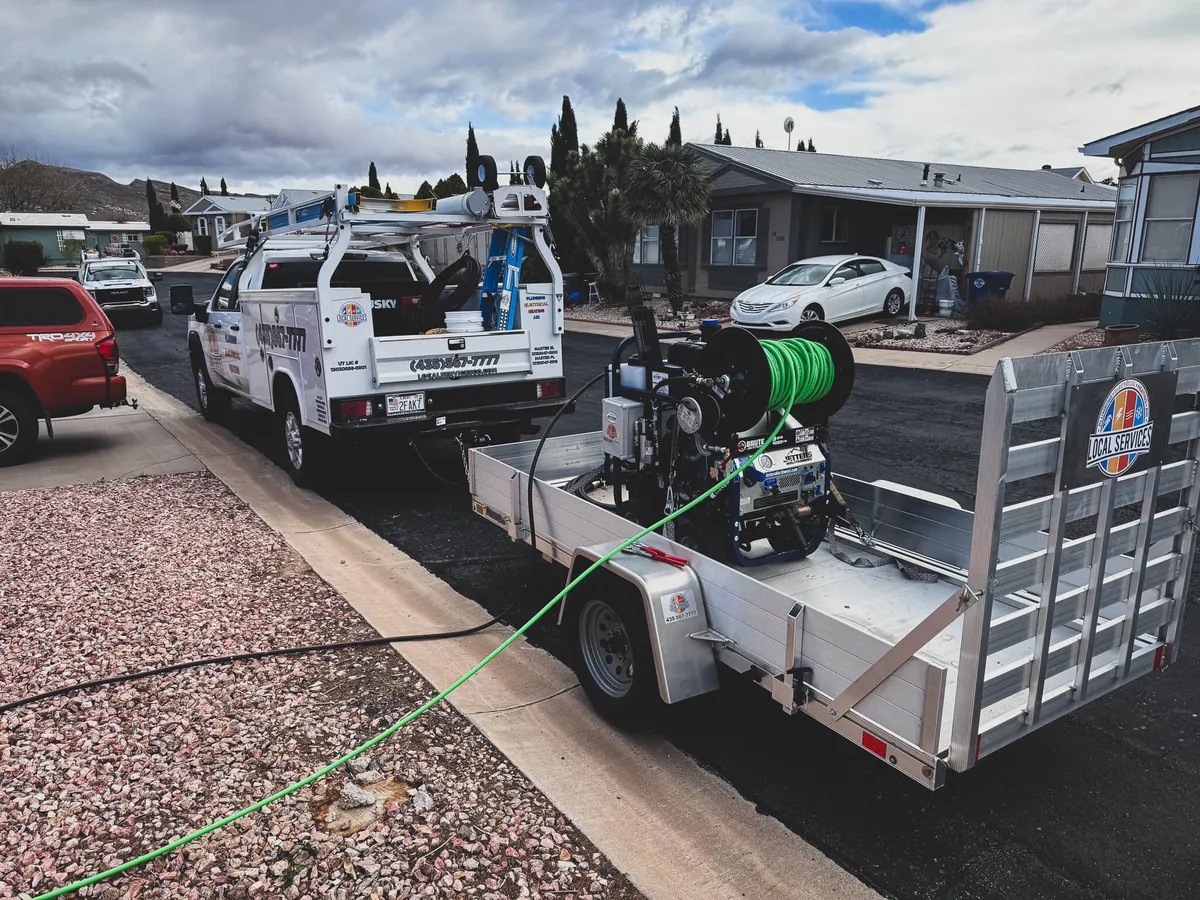
Southern Utah landscapes can change quickly during a powerful storm. Runoff may carve channels through yards, wash away soil and leave buried infrastructure more exposed than it was the day before. Homeowners often ask whether that kind of weather can damage the water line feeding their house.
The answer is sometimes. A rainstorm does not automatically damage an underground pipe. But erosion, shifting soil, exposed piping and existing weak connections can contribute to a problem. Knowing the warning signs can help you respond before a small leak becomes a larger repair.
How storm conditions affect buried plumbing
Erosion removes protective soil
Buried water lines rely partly on surrounding soil for support and protection. Concentrated runoff can remove that cover, especially on sloped lots, near retaining walls or along drainage paths. Exposed lines may be vulnerable to physical damage.
Soil movement stresses joints and connections
When soil washes out or shifts, pipes and fittings may experience forces they were not designed to withstand. The likelihood of damage depends on pipe material, age, installation and site conditions.
Existing leaks become easier to notice
Sometimes the storm did not cause the leak. Instead, wet soil, changed drainage patterns or a washed-out area makes an older problem visible. A plumber may need to distinguish a plumbing leak from ordinary storm runoff.
Five warning signs to investigate
- Unexpectedly high water usage. A bill or meter reading rises without an obvious reason.
- Lower pressure at several fixtures. The change persists after any reported utility interruption ends.
- A persistently wet area in dry weather. A patch of ground stays saturated long after nearby soil dries.
- Visible erosion near the service line. Soil has washed away where the line enters the property or house.
- Water surfacing without irrigation or rainfall. New flowing or pooling water appears when outdoor water sources are off.
No single sign proves an underground leak. Irrigation failures, drainage issues and public water infrastructure problems can produce similar symptoms.
A simple, safe first check
First, make sure the water utility has not issued an advisory or announced work in the neighborhood. Then turn off faucets and water-using appliances, and temporarily disable irrigation if it can be done safely. Look at your water meter and note whether it indicates flow. A meter can suggest that water is being used, but it cannot tell you exactly where the water is going. Do not open a flooded meter box or enter standing water to make the check.
If the meter suggests a leak, do not dig blindly. Buried electrical, gas, communication and irrigation lines may be nearby. Our leak detection services can help assess a suspected plumbing leak and determine what diagnostic work is appropriate. Always arrange required utility locating before excavation.
Contact Blue Stakes of Utah 811 before digging. Its guidance on private utility lines explains that lines beyond the meter, including private water lines and irrigation, may not be marked by utility operators. A private locator may also be needed. Do not assume an 811 request locates every buried line on your property.
Who is responsible for the line?
Responsibility depends on the local utility's rules and where the leak is located relative to the meter and service connection. Homeowners should confirm the boundary with their water provider rather than assume every underground leak is theirs to repair.
Can a smart water monitor help?
A device such as Moen Flo can monitor certain domestic plumbing flow patterns and may detect unusual usage. Whether it detects a specific underground leak depends on where it is installed and whether the affected line is downstream of the device. It cannot stop runoff, groundwater or flooding from outside the plumbing system.
Moen's Flo installation specifications place the device on the main cold-water supply after the meter, shutoff and pressure-regulating valve where applicable. A shutoff cannot isolate a leak upstream of itself. Learn more about Moen Flo water monitoring and ask whether your plumbing layout is suitable.
Protecting water lines before the next storm
Keep drainage paths clear, maintain grading away from the home and have visibly exposed or unsupported plumbing evaluated. Do not redirect runoff toward a neighbor's property or modify public drainage infrastructure without authorization. If a yard repeatedly erodes, a qualified drainage or landscaping professional may be needed in addition to a plumber.
Plumbing help in Washington County
Homeowners in St. George, Hurricane, Washington, Santa Clara and Ivins who notice unexplained water use or suspect a buried supply leak can contact Local Services Inc. about plumbing diagnostics. Visit our plumbing services page for service information or the Local Services Inc. home page for our full range of home services.
Find local service information for Hurricane, Washington City and Santa Clara. Seeing unusual water use after a storm? Contact Local Services Inc. and describe what changed, when it started and whether your meter indicates flow. Call (435) 567-7777 to discuss a plumbing appointment.
Related homeowner guidance
For a broader post-storm checklist, read After the Flood: 7 Plumbing Problems Southern Utah Homeowners Should Check. If moisture appears inside rather than along an outdoor line, our guide to slab leak warning signs explains another possible plumbing source. These symptoms still need a professional assessment rather than an assumed diagnosis.
If floodwater has reached air-conditioning or heating equipment, keep it off and read our flood-exposed HVAC safety guide for the appropriate next steps.
Frequently Asked Questions
Does every flooded yard mean a broken pipe?
No. Rainfall, irrigation, poor grading and drainage problems are common alternative explanations.
Can I find an underground leak without digging?
Meter checks and professional leak-detection methods may help narrow down a problem, although excavation can still be required for confirmation or repair.
Will my water utility repair the line to my house?
That depends on the utility's service boundary and local policies. Contact the provider to confirm responsibility.
Seeing unexplained water use, persistent wet ground or reduced pressure? Tell us what changed and ask about the appropriate plumbing diagnostic service. Do not excavate a suspected leak yourself.
Contact Us About a Suspected Water-Line Leak